

Table of Contents
- What Makes Activewear Durable Enough for Daily Use
- Best Moisture-Wicking Clothes for Daily Wear
- A Lululemon Alternative for Men Who Want Versatility
- How to Care for Technical Fabrics So They Last
- Durability Testing: What to Look For in Stitching and Fabric
- Sustainability and Repairability in Durable Activewear
- Frequently Asked Questions
Last Updated: September 16, 2026
What Makes Activewear Durable Enough for Daily Use
Durable activewear for daily use is clothing engineered to survive repeated washing, abrasion, and stretch without losing shape, color, or structural integrity. The difference between a garment that lasts two years and one that lasts six months comes down to three things: fabric weight, fiber blend, and seam construction.
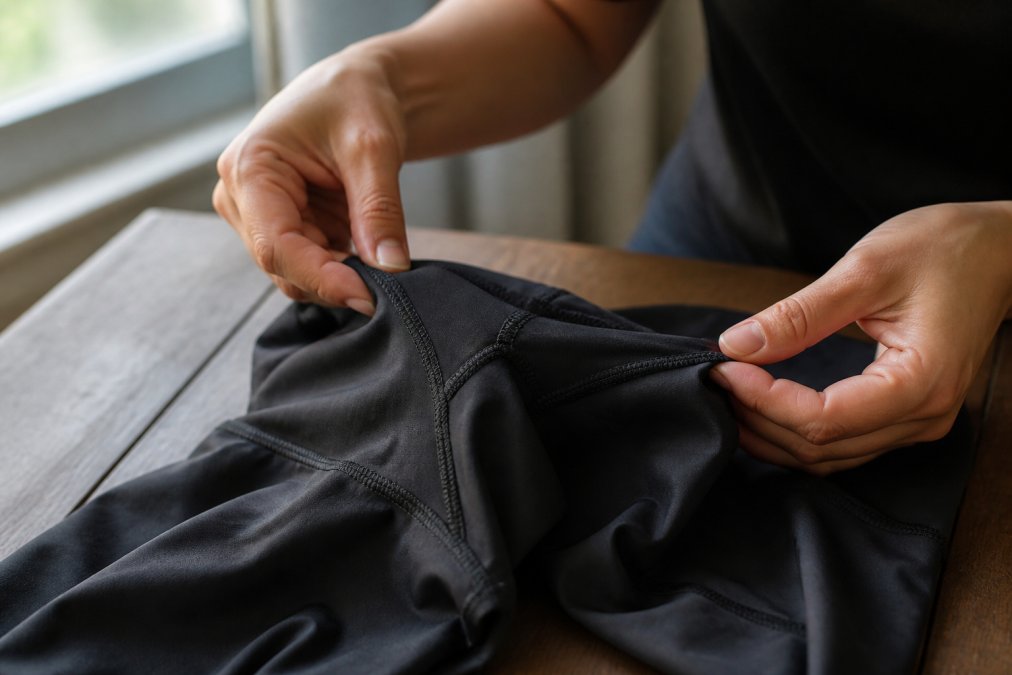
Fabric Weight, Stretch, and Seam Construction
Fabric weight is measured in ounces per square yard or grams per square meter, and it directly predicts how a garment handles daily wear. Lightweight fabrics under 4 oz feel cool but pill faster. Midweight options in the 7-8 oz range balance breathability with abrasion resistance.
Best Moisture-Wicking Clothes for Daily Wear
The best moisture-wicking clothes for daily wear balance quick-dry performance with a fit that survives repeated wash cycles. Wicking is not a coating, it is a structural property of how yarns move liquid away from skin. Understanding the mechanism tells you which garments will still perform after fifty washes and which will stop wicking by wash ten.
How Wicking Actually Works in a Daily-Wear Garment
Three mechanisms do the work:
- Capillary action. Filament yarns with a modified cross-section (star, trilobal, or channeled) create micro-grooves that pull sweat along the fiber surface. This is why polyester and nylon wick better than cotton, cotton fibers swell with water and collapse the capillary channels.
- Denier and surface area. Finer denier yarns (think 1 dpf and below) have more surface area per gram, which speeds transport. A 50/50 cotton-poly blend like the NP 26 Dry Blend Tee wicks more slowly than a 100% polyester interlock, but it feels softer against skin, a real trade-off for office and casual wear.
- Hydrophilic finish. Many performance knits are treated with a durable hydrophilic finish that spreads moisture across the surface for faster evaporation. This finish degrades with fabric softener and high heat, which is why care instructions matter as much as the fiber content.
Anti-microbial treatments (usually silver-ion or zinc-based) are separate from wicking, they control odor, not moisture. A garment can wick well and still smell if the antimicrobial finish washes out.
Polo, Tee, and Jogger Picks Built for All-Day Wear
Here's how the Nested Peak lineup handles daily rotation, with the fabric mechanics that matter:
| Product | Price | Fabric | Wicking Mechanism | Best For |
|---|---|---|---|---|
| NP 26 Performance Polo | $45 | 3.5 oz polyester interlock | Filament polyester, cationic-dyed, UPF-rated | Office, course, field |
| NP 26 Dry Blend Tee | $35 | 50/50 cotton-poly | Slower wick, softer hand, shoulder-to-shoulder taping | Everyday casual |
| NP 26 Premium Circuit Jogger | $62 | 7.8 oz poly/spandex | Midweight knit, four-way stretch, gusseted | Training, travel, daily |
| NP 26 Sport-Wick Fleece Jogger | $47 | Sport-Wick fleece | Brushed back traps warmth, face wicks | Warm-up, recovery |
Quick-Dry vs. Wicking: They Are Not the Same
Wicking moves moisture away from skin; quick-dry describes how fast the fabric releases that moisture to the air. A garment can wick well and dry slowly (common in cotton blends), or wick poorly and dry fast (common in thin nylon). For daily wear, commuting, errands, a lunchtime workout, you want both. The practical benchmark: a performance knit should air-dry in under two hours when hung in a normal indoor environment.


Activity-Specific Wicking Trade-Offs
Different daily-use scenarios stress wicking differently:
- Yoga and low-sweat movement: a softer, slower-wicking blend (like the Dry Blend Tee) is comfortable and does not chill the skin between poses.
- HIIT and hot-weather training: a filament polyester interlock (like the Performance Polo fabric) moves sweat fastest and resists clinging.
- Cold-weather warm-up and recovery: a brushed-back fleece (like the Sport-Wick Fleece Jogger) prioritizes warmth retention; wicking is secondary and the face fabric handles it.
Matching the wicking mechanism to the activity is what separates a garment that feels good on day one from one that still performs on day three hundred.
A Lululemon Alternative for Men Who Want Versatility
For men seeking a Lululemon alternative, the priority is finding pieces that work across the office, the boat, and the gym without looking out of place in any setting. Nested Peak builds exactly that: made-to-order active-casual apparel designed and finished in the USA.
How to Care for Technical Fabrics So They Last
How to care for technical fabrics comes down to three rules: cold water, low heat, and no fabric softener. Heat breaks down spandex and elastane fibers, which kills stretch recovery. Fabric softener coats performance fibers and blocks moisture-wicking.
Washing, Drying, and Storing Performance Apparel
- Machine wash cold on gentle cycle
- Skip bleach and fabric softener entirely
- Tumble dry low or hang dry to preserve shape
- Do not iron decoration or prints
- Store folded, not hung, to prevent shoulder stretch
care labeling guidance from the Federal Trade Commission requires manufacturers to list specific washing instructions on permanent labels. Follow those over generic advice.
Durability Testing: What to Look For in Stitching and Fabric
Abrasion resistance and wash-test performance are the two measurements that predict real-world longevity. But "durable" is not one specification, it is activity-specific. A fabric that survives 20,000 Martindale cycles on a yoga mat may shred in three months of barbell work. This is the gap most buying guides miss: they test for durability in the abstract instead of for the way you actually use the garment.
The Two Standard Abrasion Tests, Decoded
- Martindale. A circular specimen is rubbed against an abradant in a Lissajous pattern. Results are reported as the number of cycles until the fabric shows visible wear or a hole. For apparel knits, a common industry benchmark is 20,000-30,000 cycles for general wear, with higher counts for heavy-duty applications. The exact threshold depends on the fabric weight and end use, a 7.8 oz poly/spandex jogger will typically outperform a 3.5 oz interlock at the same cycle count.
- Wyzenbeek. A cylindrical drum covered in abradant oscillates against the fabric. Results are reported as double rubs. Wyzenbeek is more common in upholstery and industrial textiles, but it appears in activewear specs for abrasion-critical panels (knees, seat, elbows).
Pilling resistance is measured separately, usually on a scale of 1-5 (5 = no pilling). A fabric that passes abrasion but pills at 2 will look worn long before it structurally fails.
Activity-Specific Durability: Yoga-Durable vs. HIIT-Durable
This is the distinction most guides skip, and it changes what you should buy:
- Yoga-durable (stretch-focused). The dominant failure mode is loss of recovery, sagging knees, stretched waistbands, bagged seats. The stress is repeated elongation, not abrasion. Look for 10-12% spandex or elastane content, four-way stretch, and a gusseted crotch. Abrasion resistance matters less here; stretch recovery and seam integrity matter more.
- HIIT-durable (abrasion-focused). The dominant failure mode is surface abrasion from floor contact, dumbbells, and repeated high-friction movement. The stress is mechanical wear, not elongation. Look for heavier fabric weight (7 oz and up), tightly knit or woven face fabrics, and reinforced stitching at stress points. Spandex content can be lower (5-8%) because the fabric does not need to stretch as far.
- Daily-wear-durable (wash-focused). The dominant failure mode is degradation from repeated laundering, color loss, pilling, seam separation, and finish washout. The stress is thermal and chemical, not mechanical. Look for colorfast dyes (cationic-dyed polyester holds color better than piece-dyed), flatlock seams, and care instructions you will actually follow.
Stitching: The Failure Points That Tests Do Not Catch
Abrasion tests measure fabric, not construction. The seams are where most garments actually fail:
- Flatlock seams lie flat and distribute stress across the stitch line. They are the standard for next-to-skin activewear.
- Serged seams are bulkier and concentrate stress at the stitch, which is where chafing and blowouts start.
- Bartacks (short, dense stitch clusters) at pocket corners, fly openings, and drawcord exits prevent the tear-through that kills a garment early.
- Gussets, the triangular panel in the crotch, eliminate the single seam that otherwise takes the full stress of a squat or lunge.
A Home Wash Test You Can Run This Week
Launder the garment five times on the care label's recommended cycle and inspect after each wash:
- Pilling, check the seat, inner thighs, and underarms against a light source.
- Color loss, compare the washed garment to an unwashed one of the same color, or to the inside of a hem.
- Seam integrity, tug gently along each seam; look for stitch elongation or popped threads.
- Stretch recovery, stretch a knee or elbow panel and release; it should snap back within a second or two.
Sustainability and Repairability in Durable Activewear
Sustainability in performance apparel has two sides: what goes into the fabric and how long the garment stays out of a landfill. GRS-certified recycled polyester, like the yarn in the NP 26 Women's Performance Legging, verifies recycled content through the supply chain.

Frequently Asked Questions
What are the most durable gym clothes for everyday wear?
Look for fabrics with higher abrasion resistance like polyester-spandex blends and reinforced seams. Nested Peak's Premium Circuit Jogger uses a 7.8 oz poly/spandex blend, while the Performance Polo is made from 100% polyester interlock with cationic dyes for colorfastness. Double-needle stitching and shoulder-to-shoulder taping add longevity.
How can you tell if activewear is high quality and long-lasting?
Check the fabric weight, seam construction, and shape retention after washing. Flatlock seams and a separate gusset reduce friction and prevent tearing. Pre-shrunk fabrics like the NP 26 Dry Blend Tee maintain fit wash after wash. Also look for moisture-wicking.
Is it worth investing in premium activewear brands?
Premium pieces often use denser fabrics and better construction that resist pilling and abrasion. Nested Peak's made-to-order model starts at $28 for a Dri-Power Tee and $62 for the Premium Circuit Jogger. The upfront cost can be offset by longer wear life and fewer replacements, especially if you wear the same items multiple times per week.
What features should I look for in activewear for daily use?
Prioritize four-way stretch, moisture-wicking, and breathability. A gusset improves mobility and comfort. For versatility, choose pieces like the Performance Polo with UPF protection and colorfastness, or the Sport-Wick Fleece Jogger with tapered fit. Made-to-order options from Nested Peak are designed and finished in the USA.
Durable activewear for daily use rewards buyers who check fabric weight, seam construction, and care requirements before purchasing. Nested Peak designs and finishes every piece in the USA, produces made-to-order to cut waste, and builds garments that move from the boat to the office without a change of clothes. Shop the NP 26 collection and invest in pieces built to last.